Can I Add a Battery to My Farm Solar Panels?
Quick answer
Can I add a battery to my existing farm solar panels?
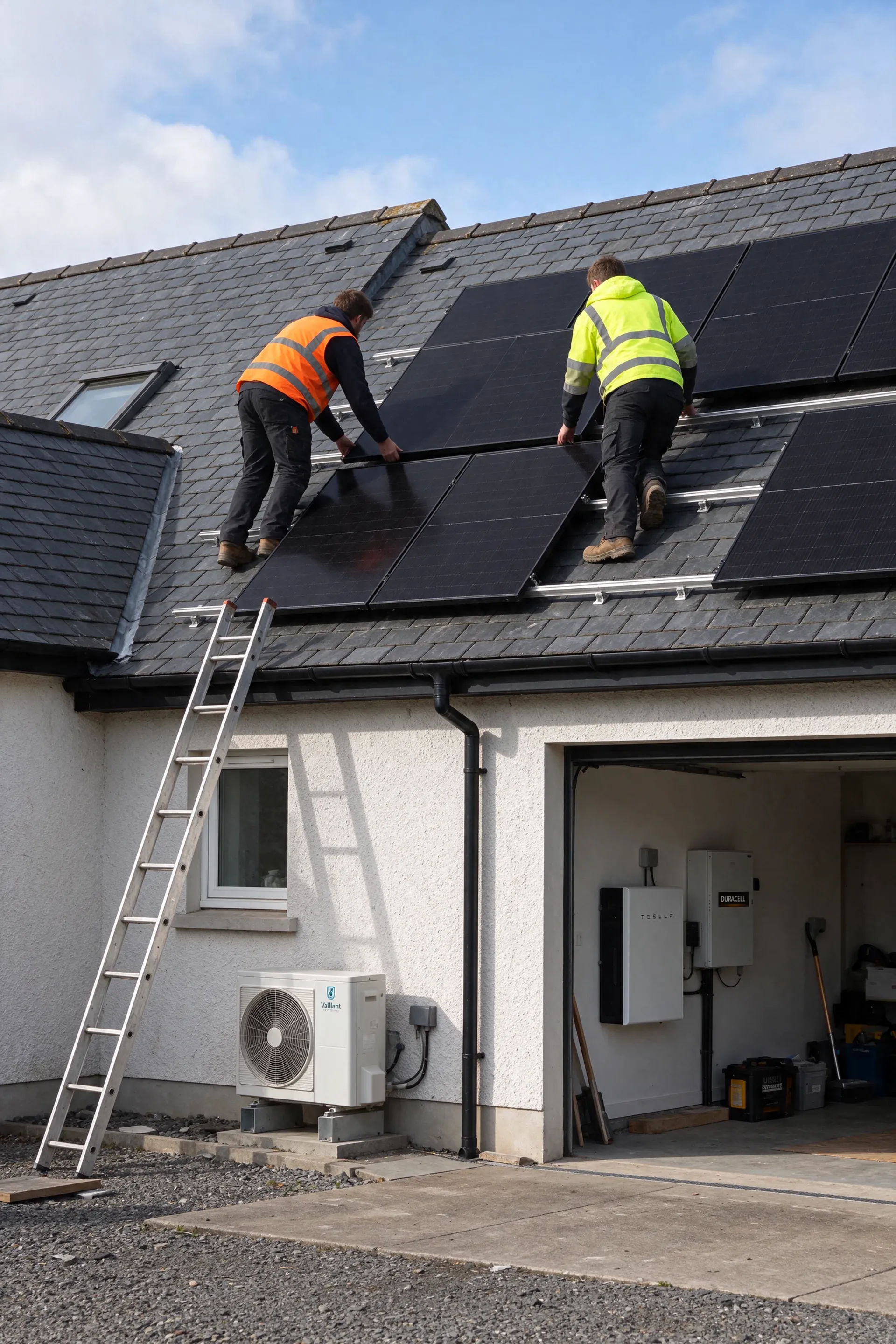
Yes, you can add a battery to most existing farm solar arrays. The method depends on your inverter: AC coupling adds a battery with its own inverter, while DC coupling uses a hybrid inverter. The survey checks compatibility and recommends the simplest approach. You do not need to replace your panels.
What are the key facts?
- Most existing solar arrays can take a battery
- AC coupling uses a separate battery inverter; DC coupling uses a hybrid inverter
- No need to replace existing solar panels
- Retrofit battery avoids the cost of a new array
- Typical installation takes one to two days
- DNO notification is handled by the installer
Last updated: 11 November 2026
Many Scottish farms already have solar panels on shed roofs or ground-mounted arrays and are now looking at adding battery storage. The good news is that most existing arrays can be retrofitted with a battery, and you do not need to replace your panels. This page explains how it works and what the survey checks.
How does adding a battery to existing solar work?
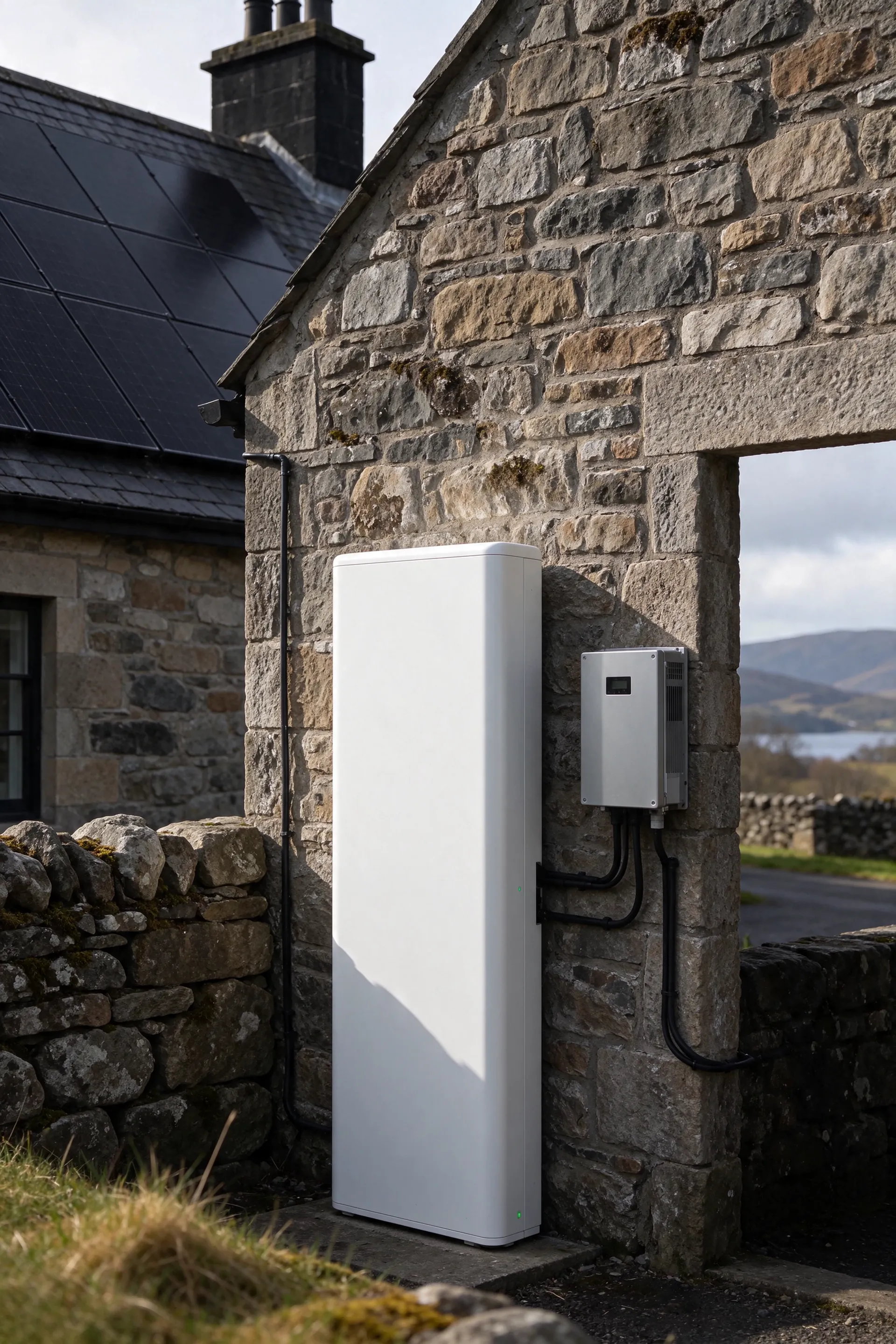
A battery connects to your existing solar array through one of two methods. AC coupling adds a battery with its own inverter on the AC side of your existing system. This is often the simplest option for existing arrays because it does not require changing your solar inverter. DC coupling replaces your solar inverter with a hybrid inverter that manages both the panels and the battery, which can be more efficient but involves more electrical work.
The survey checks your current inverter make and model, your wiring and your distribution board before recommending the best approach for your setup.
Will I need to replace my solar panels?
No. Adding a battery does not require replacing your panels. The battery stores the surplus your panels already generate, so the panels stay exactly where they are. The work is on the electrical side, connecting the battery and inverter to your existing system.
Does adding a battery cost less than a new system?
Retrofitting a battery to existing solar avoids the cost of new panels and their mounting, which is a significant saving. The main cost is the battery itself, the inverter arrangement and the installation labour. Some installations need a hybrid inverter replacement, while others can use AC coupling with the existing solar inverter left in place. The survey identifies the most cost-effective option for your equipment.
What about export payments or feed-in tariffs?
Adding a battery may change how much you export to the grid, because the battery captures surplus that would previously have been exported. The survey notes any existing tariff arrangements so you can check the implications before proceeding. Some batteries can also export stored energy at profitable times, depending on your inverter and tariff.
How long does a battery retrofit take?
A typical retrofit installation takes one to two days, depending on the complexity of the wiring and whether the inverter needs replacing. Your installer confirms the timeframe after the survey and handles the DNO notification.
How do I get started?
Fill in the quote form on this page with details of your existing solar array, including the inverter make if you know it. We will arrange a survey through our MCS-certified partners and send an itemised quotation. For more on how solar and batteries work together, read our solar and battery integration guide. For more answers, see the Scottish Energy Efficiency questions page.
Frequently asked questions
Can I add a battery to any existing solar array?
Most existing solar arrays can take a battery, but the method depends on your inverter. Some use AC coupling with a separate battery inverter, while others suit a hybrid inverter replacement. The survey checks compatibility.
Do I need to replace my solar panels?
No. Adding a battery does not require replacing your panels. The battery connects to your existing array through the inverter arrangement the survey recommends.
What is the difference between AC and DC coupling for a retrofit?
AC coupling adds a battery with its own inverter on the AC side, which is often simpler for existing arrays. DC coupling uses a hybrid inverter shared with the panels, which can be more efficient for new installations.
Will adding a battery affect my feed-in tariff or export payments?
Adding storage may change how much you export. The survey notes any existing tariff arrangements so you can check the implications before proceeding.
How long does a battery retrofit take?
A typical retrofit installation takes one to two days, depending on the complexity of the wiring and whether the inverter needs replacing. Your installer confirms the timeframe after the survey.
Reviewed by the Scottish Energy Efficiency team.
Last updated: